
Pages

Thursday, 3 January 2019

A New Year Reflection

Throughout any school year I have taught, I have acquired new knowledge, strategies, and resources that could help further shape my teaching. Instead of waiting for the next LTO to implement and adapt, I have decided to start as of next week when we all return to our lovely students. This post will contain a reflection of the changes I wish to implement in my current Grade 3 classroom. Kind of like  how we do 2 stars and a Wish with our students, I too will reflect on what is going well and what I would like to do differently.

Image result for reflection

Overview
  • Birthday Wall
  • Daily 5 Schedule 
  • Morning Entry Routine
  • Classroom Materials
  • Computer Schedule
  • Classroom Jobs
  • Visual Schedule
  • Mindfulness Area
  • Kindness Inquiry
  • Student Self-Assessment and Goal Setting
  • @Educate.Invest.Inspire


Birthday Wall

This is something that I have seen done in one of the Kindergarten classes at our school back when I was a Designated Early Childhood Educator and I LOVED it! I was meaning to put it up during the first month/s of school but they just flew by! I finally got around to it on the last day before the break and I really recommend having one in your class. It is nice for the students to see themselves reflected in the classroom environment and it makes it easy for us as Teachers not to miss out on birthdays.


Daily 5 Schedule 

When I first implemented the Daily 5 schedule, I would continuously shift around each name, individually, each day. This over time was not sufficient for me, and after observing what other teachers in Primary were doing, I have adapted the schedule to be more efficient. 


Morning Entry Routine

Each day I am very consistent with the morning entry routines and often find myself having to repeat them even though they never change. I decided to record them on a piece of chart paper and I have posted it onto the whiteboard at the front of the class. Instead of repeating individual instructions multiple times, I am now just saying, "please show me 1, 2, 3, 4". This has been an effective strategy during our morning routine and I will be continuing it into the new year.


Classroom Materials

I am still uncertain how classroom materials can disappear so quickly (mostly pencils). I have created 5 bins, 1 for each of the 5 table groups we have. In each bin contains a variety of needed classroom materials that the students at that table group can use as they wish. As a group, I had the students do a material count and create  their own material checklist. Each day a different member of the group will  be responsible for retrieving and returning the materials bin for their group. At the end of each day, as part of end of day routines, they are to go through the checklist to ensure they have all their materials. If anything is missing, they are encouraged to look around the classroom and also to ask other groups. This is a great responsibility task for the students and a great way to ensure everyone has what they need. 

Image result for computer

Computer Schedule

Whenever there was an opportunity for free choice, many students would rush over to the computers and arguments would always occur for who was there first or who was not getting off when the timer was finished. I quickly realized that this needed some organization so that harmony could be restored. I decided that since we have 5 groups and we also have 5 days in the cycle, that the schedule would commence as follows:
Day 1- Group 1
Day 2- Group 2
Day 3- Group 3
Day 4- Group 4
Day 5- Group 5
This means that only that group could be on tech each day, which eliminated the arguments and unfairness of tech time. Not everyone in that group likes or wants to be on the computer, and you will often have empty computers. Some students may beg to play on the computers from other groups because they see it not being used. It is up to your discretion to let them play. I did in the beginning and quickly realized that it still caused the same issues, so in January when I go back I will be more firm on the schedule. This way, each student will have equal turns throughout the week-no one excluded and no more arguments over computers.


Classroom Jobs

The classroom jobs are a hit or miss. Some students actively fill their responsibility and some students disregard it completely. In my class, I choose names out of a container and when the student is called, they have the option to choose one of the available jobs listed or to go the following week (you can only postpone once, not multiple times in a row). I decided to add some pictures to the cardholders for each classroom job to make it look more appealing to my Grade 3's and it also helps to have a visual representation if you don't know what the word means. I also added brief descriptions of what each job entails, in case they forgot. Hopefully this draws more interest and we can continue to keep the class nice and tidy and running smoothly as a team!


Visual Schedule

At the beginning of the year, I had only posted words on the visual schedule for the students. I constantly had questions like "when is it lunch?" "when is it recess?" "do we have gym today?". I decided to also add pictures to each of the items on the schedule so that the students can make the association between the pictures and words- it looks nicer too!


Mindfulness Area

When I was a DECE working with Mrs. Dutt-Lym of KindieKorner, she taught me of the importance of spaces, including one where students can use it to self-regulate. I have carried this throughout my years as a DECE, and into a classroom Teacher with my own grade 3 class this year. However, I noticed that the area was not really being used. In January, I will be asking the students what they would like to see in the mindfulness area and how they would like to use it. Perhaps the student input will generate more use for the area and its materials. My grade partner Mrs. Gaffen shared a wonderful Zones of Regulation resource which I posted closer to the area so it can be utilized there.

Displaying IMG_8348.JPG

Kindness Inquiry

In the new year, classes at Moraine Hills Public School are going to take part in individual kindness inquiries so that we can share our learning with the rest of the school. Each class will co-create and research their own inquiry question and document their learning throughout. Future blog post to follow about our class inquiry! Our Vice Principal Mrs. Cariglia-Bull and one of our teachers Mr. Harber had created the logo above for our school :) We also have had t-shirts made.
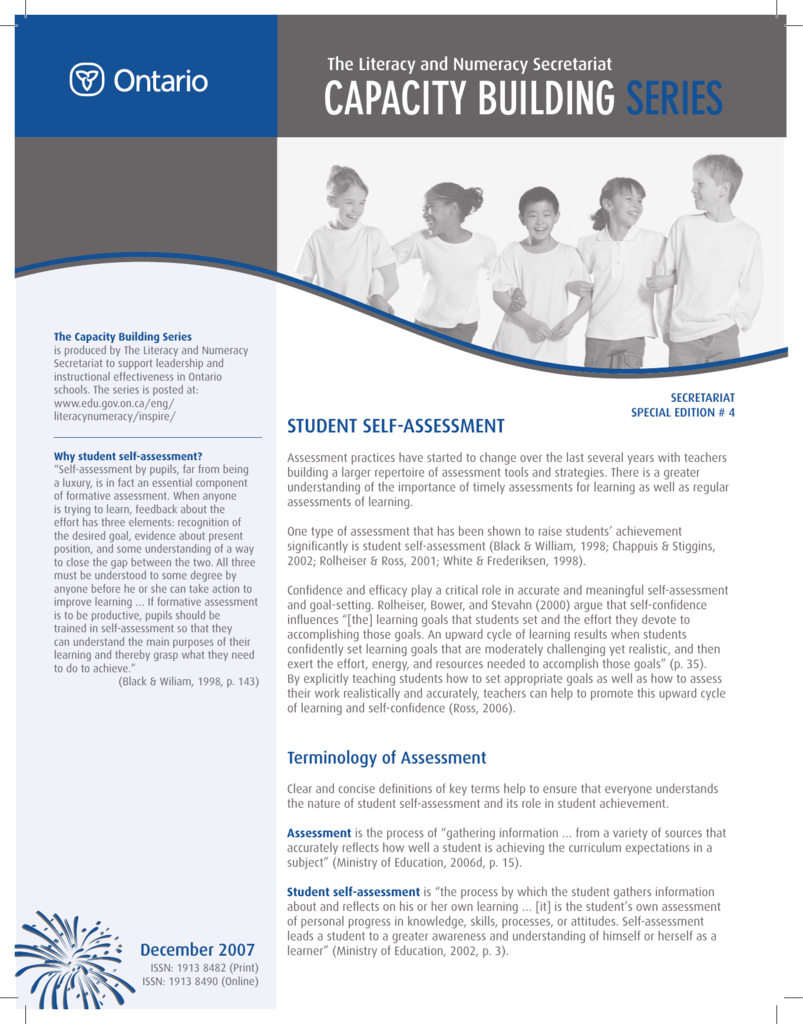
Image result for capacity building series student self assessment

Student Self-Assessment and Goal Setting

Not only, is this a time for Educators to self-reflect on current teaching practices, but a time for our students to self-reflect as well. Visit "Capacity Building Series: Student Self-Assessment" for ways you can support this for your students.

@Educate.Invest.Inspire
Thank you for reading my first blog post of 2019! I look forward to sharing more of my learning journey with all of you. Please feel free to follow my other Educational Social Media Accounts by clicking on the links below:

Instagram                Twitter                 Pinterest                 TeachersPayTeachers


"Reflection is one of the most underused yet powerful tools for success"- Richard Carlson 
& "We do not learn from experience, we learn from reflecting on experience"-  John Dewey


~Mrs. Rose Marcelli-Najafi, OCT, RECE


Behaviour Management Strategies Part 2

Over the years as a Teacher, I have adapted certain behaviour management strategies that work best with varying situations. Each situation will require an individual response based on the severity of the situation and the student's history, triggers, etc. Below is a general outline of how I apply behaviour management strategies in my Grade 3 classroom.

To gather students attention
I like to use a clap sequence, rain stick, or TRIBES strategies to gather students attention, and this seems to work well. It is important to ensure you have the attention of all your students and you wait for quiet before giving instructions, otherwise you will find yourself repeating them several times.

A lesson during instructional time
I am a very calm and patient teacher, many little things such as fidgeting, do not bother me. However, if someone is disrupting a lesson during instructional time which prevents themselves or others from learning, that is not fair or kind. I always start with a warning which is usually a non-verbal cue or the students name. If they are still disrupting the lesson I show them the number 2 and tell them if they continue they will get a note home to their parents in their agenda. I may also ask them to relocate to a different spot on the carpet if their current spot is a distraction to them. If the disruption persists, then I ask for their agenda and write a quick note to their parents. This strategy has been very effective in my class so far and I will continue to use it. Another helpful strategy which I have not had to use too much this year, is the first/then approach (ie. first finish your work then you can play on the computer for 5 minutes). The reward can be any preferred activity of the student's choice.

Independent work period/free choice period
In contrast, if there was an issue happening during a work period it would look a bit differently. First step would still be a warning. Second step, I would speak with the child 1:1 at eye level and inquire about what has happened? how can I help? and discuss what will happen if the behaviour continues (this part is difficult to do during a lesson in instructional time because there is an audience present). Third would still be a quick note home to parents in the agenda. It is important for parents to understand how their child is learning and behaving at school.


A conflict between 2 or more students
If there was a conflict between 2 or more students, I like to use the YRDSB Restorative Approach. Find out what has happened? who was affected? what were you thinking or feeling? how can we make it right? what might you do differently next time? Depending on the severity of the situation, I would document and contact parents. There are some instances where I am unable to meet with the students to resolve this issue in a timely manner and I would contact the office for EA support. Our Educational Assistants at our school are really supporting and skilled in managing conflict resolution. 

CPI Support
In the event that the student has escalated their behaviour and are now harming themselves or others or may be threatening themselves or others, I would just call the office for CPI support. CPI would also be called if a student is displaying signs that they may be escalating. It is important to check if your students have a Safety Plan or Individual Action Plan and respond accordingly. 

Thank you for reading! A New Year Reflection blog post is coming shortly!

~Mrs. Rose Marcelli-Najafi, OCT, RECE


Thursday, 21 June 2018

MHPS 3rd Annual Family Math Night


On Thursday May 24th, 2018 Moraine Hills Public School hosted our 3rd Annual Family Math Night. This is the second year in a row that I have had the honour of being the Chairperson for this event! It takes wonderful and supportive Administrators like Principal Deborah Snow and Vice Principal Jonathan Weisinger and dedicated staff members and volunteers to help make this event so successful. This post will highlight the new additions we made to this year's event, as well as some Tips for Educators who wish to implement a Family Math Night at their school next year. Click here AND here for more information about Family Math Night at Moraine Hills P.S. in past years).

New Additions


  • Passports
This year we decided to create passports so that the students and their families had the opportunity to participate in all of the Mathematics Learning opportunities that we had to offer. At each station they visited, they were given a stamp on that corresponding page in their passport. At the end of the evening, the families drop their passports in the drop-off bin on their way out. Completed passports were drawn for the grand prize which was a 1-2 Hour Coding Session for the student and their entire class from Hatch Canada. To learn more about Hatch Canada or their programs for your children, click here.


  • Community Partners & More Prizes
I like to keep some prizes the same, oldies but goodies; but also wanted to add a bunch more options to the mix to keep things interesting and exciting. Prizes are usually for the top 3 winners of each Estimation question. This year, the top prize at the Estimation Station was a Learning Resources STEM Robot Mouse Coding Activity Set valued at $59.99. This prize also connected to one of the Math stations we had available called, "Bee Bot Challenge" where the students had the opportunity to practice basic coding skills. To obtain this Coding Set click here. Other amazing prizes included: SimonAir, Blokus, Q-Bitz, Wooden Tetris, and Math Storybooks such as "The Action of Subtraction."


  • Outdoor Learning Opportunities
As a school and school board, we encourage learning in the outdoors as we believe the outdoors to have many benefits to our well-being (Click here to learn more about Outdoor Education). This year, we started small and offered two really great learning opportunities outdoors and that was: Outdoor Math Story Walk and Transformational Geometry. The Math Story Walk allowed students and their families to take a walk outside, breathe in the fresh air, read a story together, and participate in some hands on learning experiences about addition and subtraction. The Transformational Geometry station allowed students and their families to physically experience the concepts of Translations, Reflections, and Rotations.


  • ELL & Math Booth
Our English Language Learner Teachers put together a variety of assessment samples that show how modifications or accommodations can be made to that piece of assessment which meets the needs and abilities of English Language Learner Students. This gave families a better understanding of what it might "look like" in practice.


  • Be Kind to Yourself & Town Hall Booth
Moraine Hills has done a lot of work around promoting and raising awareness for Kindness. Kindness to Yourself, Kindness to Others, and Kindness to the Environment. We have also conducted and analyzed research for our Town Hall initiatives around Grades and Student self-worth and well-being. This station facilitated the creation of a Wellness Toolkit so that students and their families were provided with some information and coping strategies to use at home. The information and strategies that were presented at this station were very well received by students and their families.


  • Coding Activities
To support Modern Learning and technology use, we also had some educators facilitating a coding station called, "Bee Bot Challenge". This station allowed students and their families to gain exposure to the basics of coding and learn more about the curriculum connections.


  • Math Night Banner
This year we decided to purchase a professionally made banner from VistaPrint. Since Family Math Night has become an annual event at Moraine Hills, we decided to create a reusable banner for efficiency and aesthetic.

Math Night Tips


  • Stay Organized: Have a plan and organize achievable steps to attain your plan. If your event is on the beginning of May, start planning the beginning of April. Some web-based APPs/Programs that helped me stay organized this year were: Google Keep and Google Drive.

  • Meetings: Try your best to arrange for meetings that meet the needs of your volunteers and try not to schedule meetings too often because all Educators are busy. Also, have an agenda prepared to help guide your meeting and stay on track.

  • Accept Input: It is important to listen and accept input from other Educators/volunteers. You may not agree with everything, but everyone should feel welcomed, supported, and that their ideas are valued.

  • Offer Help: Offer extra periods of time that you will be available to support staff who would like assistance with ideas for a station, gathering or creating materials, etc.

  • Make Yourself Available: If you are the person running the event, it is important to make yourself available for the "just incase" circumstances. Try not to station yourself at one activity. I like to be responsible for the Estimation Station. This activity is self-run which allows for me to go where I am needed. For example, one year someone had to leave early so I was able to cover their station. This year we had more families than anticipated and we ran out of passports, so I (among others) were able to run and create more passports (a good problem to have).

  • Document the Learning: Keep a Math Night Binder which includes all activities and resources for each of your events so that you have a repertoire to choose from/refer to when needed. It also makes for a nice portfolio ;)

  • Share Resources with Staff: Many of our staff have volunteered for the Math Night event so they know all the activities and resources but I have also encouraged that everyone upload everything to our school shared team drive. This will allow all staff at our school community to access and implement these activities in their classrooms. *Resources and activities have been shared with families at Math Night

  • Have Fun! : The most important tip is to have fun and enjoy the event because a lot of planning goes into it and it goes by very quickly.


I have said it once and I will say it again...


Thank you to everyone who dedicated their time and resources to the event! It is really valued and appreciated, not only by myself but by our Administrators and our school community!


SaveSave

Wednesday, 9 May 2018

Fostering Inclusive, Mentally Healthy Learning Environments


On Wednesday April 18th, 2018 I attended an NTIP Series workshop called “Fostering Inclusive, Mentally Healthy Learning Environments”. I place such high importance and value in all professional development opportunities as they allow you to learn and grow in your professional practice as an Educator. In this ever changing world, we need to keep up with current practices. Today’s session aligns with the York Region District School Board’s (YRDSB) Foci Mental Health and Modern Learning (Mathematics is part of the foci but not this can be applied to the learning environment as a whole, including all subject areas). This session also aligns with Moraine Hills Public School’s “Be Kind” Team initiatives of “Kindness to Self and Kindness to Others”.  

PROFESSIONAL PRACTTICE

With every workshop I attend, I take plenty of notes and I like to make to-do lists containing at least one thing I can put into practice ASAP because research shows that when you apply your newfound knowledge within 24 hours, you are more likely to store it and use it. With this session, I found 8 practical takeaway ideas that I personally resonated with and felt would create a positive impact in my current Grade 6 classroom and would like to share them with you below:


  1.      Sunshine Calls

This can be a call, e-mail, or face-to-face communication at pick up where the Educator shares one good thing that the student has done, said, or accomplished that day. It is often found that parents immediately associate school calls with a negative emotion because they fear something happened to their child or that their child is in trouble. If Educators can add in a couple of Sunshine Calls per student per year, it not only makes the parents happy and proud, but also the student. I find that personally I have not been doing enough of this and will try to do this more often. I found a really great TPT FREE resource called “Freebie check-off sheet for positive parent communication” created by Teacher to the Core. It will allow you to keep track of your wonderful calls or e-mails so that you can spread the sunshine evenly among your students! Click here to visit the resource.


Flexible Seating27_Bored Teachers   Flexible Seating1_Bored Teachers
                 (@TheUniqueClassroom)                                   (@SettingUpForSecond)       


2.   Flexible Seating

In the beginning of this Grade 6 LTO, it was a rolling LTO which meant that we were not sure when the Teacher would be back so it kept getting extended. Seeing as I was never really sure when my last day was, I didn’t want to change TOO much in the classroom because it wasn’t really my class-just yet. At this point I am fairly certain that I will be here until the end of the year and even if I am not, I am willing to try to incorporate some flexible seating into my classroom. This can look differently for each class you go to. The students are sitting in their seats for nearly the whole day, after a while that can get pretty boring and uncomfortable. I currently have a ZEN Zone area where my students can sit/lay down with some pillows or in a comfy couch chair (from Mr. Weisinger our VP) and read their book or do some work there too. This means that I have spaces in my classroom for independent work/pairs (at desks), and independent/ pairs at ZEN Zone. In my next class, I would really like to include: a carpet, bean bags, lounge chairs, bouncy ball chair. For some inspiration, you can visit here.


3. Coping With Stress

It is evident that some students and adults for that matter, have a hard time coping with stress. In order for someone to be able to cope with stress, they will need to have some strategies in place to choose from. Many students are not equipped with coping strategies, so when they come to class and had a rough night before, or at recess and they don’t know what to do, you will see behavior. It may be visible in that you see students exhibit verbal or physical aggression towards others; but it can also be invisible in that a student shuts down and won’t speak to you or participate. If we as a collective of Educators and Caregivers can provide our students and children with coping strategies, it allows them to overcome their challenges and become resilient individuals. There are many ways to do this, and it all depends on the learners in your classroom. For our class, we have community circle and open communication about anything we wish to discuss. I have also implemented a “ZEN Zone” area, which was created by The Superhero Teacher. Click here to access the link for purchase. It was well worth the buy as it provides many wellness and mindfulness opportunities for your students (and yourself) to participate in. We also keep a wellness journal to reflect on different things each day. The students have access to this during each morning recess and it will be open to all classes once my students have mastered the challenges so that they can lead it out themselves. 


Image result for antecedent behavior consequence chart template

4. ABC Chart

An ABC Chart is a great way to track behaviours. A=Antecedents, B=Behaviours, C= Consequences. To read more about this and obtain a sample tracking sheet, visit one of my earlier blog posts titled “Creating Equitable Special Education Programs in Ontario Classrooms” by clicking here: http://educateinvestinspire.blogspot.ca/2016/08/creating-equitable-special-education.html
I have previously used this regularly when I was working in a Full-Day Kindergarten Classroom but for some reason when I came to Grade 6 I had forgotten all about it! There is so much to learn and so much to do as a new Teacher, which is why I really like to reflect on my experiences through my blog so that I can remember the things that worked well and change the things that did not. The ABC Chart worked well, and I will be re-implementing it in my Grade 6 class to help me try to identify the triggers. When you can identify the triggers, you can gain a better understanding of how to support or prevent.

Image result for class norms
5. Re-Visiting Class Norms

Throughout the year, students change and grow and the classroom norms that were once very effective, may no longer be effective as now there are differing needs. We will be re-visiting class norms/agreements and making any necessary modifications so that our classroom can continue to run smoothly and inclusively as possible. It is key to have students involved in this process so that there is “buy in”. They are more likely to do something or follow an agreement if they have a personal vested interest because they feel their ideas are valued.

Image result for google form

6. Learning Partner Survey

This is something new I have not yet tried. It was suggested in the workshop to create a Google Form that contains 3 partner options. It is an anonymous way for students to select people they feel most comfortable with. In the end, it is up to the Educators decision if that partner will be a good fit or if you want to let them have a chance to prove you wrong. I will definitely be giving this a try, even in group work scenarios because then you can just copy and paste the grouping results.


7. Storyline Online

(Include the video from the about page with this section instead of a pic http://www.storylineonline.net/about-us/
This is an online website where celebrities are doing read-alouds of well known books. Click here http://www.storylineonline.net/ to visit the website. I feel that my students will really like this, especially in Grade 6 where celebrities are part of their interests and some even role models. Even a simple read-aloud to spark an inquiry, drama, or art provocation would be engaging for any learners 


8. Self-Advocacy Cards

I have heard about PECS or Visual Aids for learning, but have never heard about Self-Advocacy cards until the NTIP session I attended. Advocacy cards are needed for some but good for all! They allow students to communicate without the social pressures of raising their hand or verbally speaking if they physically are unable or don’t feel comfortable in doing so. The students can simply show you the card and then you will know how to respond.
  •     Students will be able to communicate their needs or ideas
  •    Students will feel less social pressure or anxiety in doing so
  •    Students will become empowered with the ability to advocate for themselves

I created Self Advocacy cards that I feel meets the needs of the students in my class. I also created a blank template for students to create their own, if there was anything I was missing that personally applied to them. If this is something you would like to implement in your classroom you can purchase them from my TPT site, click here.


REFLECTION

I wish that I had the opportunity to take this workshop earlier on in the school year so that I could have all these great ideas in place. At least I have curated a wonderful repertoire for next year! If you are a new Teacher and have the opportunity to participate in the NTIP Program with your school board, then I highly recommend it!


QUOTE 

I would like to end off with this quote that was presented to me at the NTIP learning session:

“When schools attend systematically to students’ social and emotional skills, the academic achievement of children increases, the incidence of problem behaviour decreases, and the quality of the relationships surrounding each child improves”.           
(Maurice J. Elias et al Promoting Social and Emotional Learning Guidelines for Educators, 1997)

#takethetime
#YRDSBmh
#YRDSBInclusion


SaveSave